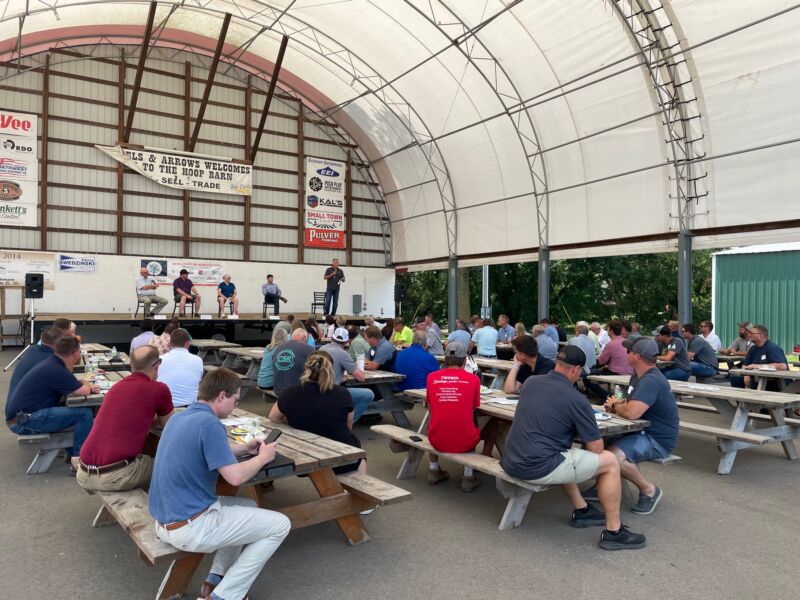
MARSHALL, Minn. — Farm profitability, government policy, rising production costs and the need for stronger advocacy were among the major topics discussed Tuesday during the Marshall Area Chamber of Commerce’s ninth annual State of Agriculture event at the Lyon County Fairgrounds. Moderator Ken Franzky of Centrol Crop Consulting led a panel featuring Minnesota Farm Bureau Vice President Carolyn Olson, farm management analyst Kent Thiesse, livestock producer and broadcaster Ryan Vos, and Jack Long, agricultural legislative assistant for U.S. Rep. Michelle Fischbach.
The panel agreed that while some sectors of agriculture are performing well, many crop producers continue to face financial challenges after several years of narrow or negative profit margins.
Thiesse said many corn and soybean farmers have struggled with negative cash flow for roughly the past three years without government assistance. While commodity prices have improved somewhat in recent weeks, he said increasing costs for fertilizer, fuel, machinery repairs and other inputs continue to pressure farm profitability.
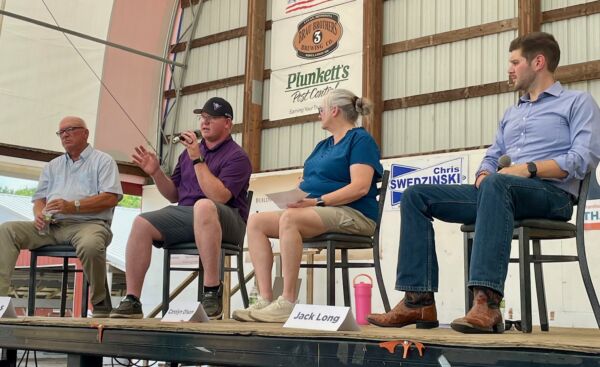
Ryan Vos speaks at the State of Agriculture program.
Vos said strong crop yields last year helped many producers weather low grain prices, but current weather conditions remain a concern.
“If it wasn’t for the bumper crop yields we had last year, people would be in a much different frame of mind right now,” Vos said, noting much of southwest Minnesota is in need of rainfall. He added that diversified operations are generally better positioned to withstand swings in commodity markets, while cattle producers continue to benefit from historically strong prices.
Olson offered an organic farming perspective, explaining that organic grain markets operate independently from conventional markets. She said increased demand from organic dairy operations has strengthened organic corn prices, while reduced imports have created additional opportunities for domestic producers.
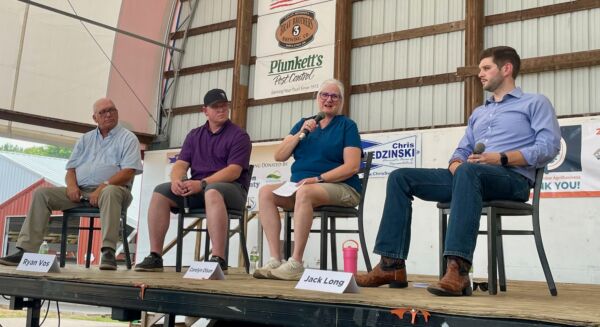
Carolyn Olson speaks at the State of Agriculture program.
Long said discussions in Washington continue regarding additional economic assistance for agriculture but emphasized the need for long-term solutions rather than relying on emergency payments.
“The House released their budget resolution, which has about $12 billion in agricultural economic assistance,” Long said, adding lawmakers will still need to determine how those funds would be distributed among commodities and livestock sectors.
State policy also received considerable attention during the forum.
Olson said agricultural organizations spent much of the past legislative session defending against proposals they believed would negatively affect farming, including restrictions on crop protection products. She encouraged producers to remain engaged with elected officials and agricultural organizations.
Thiesse pointed to rising property taxes and unfunded mandates placed on counties, schools and local governments as growing concerns for rural Minnesota. Vos highlighted proposed feedlot permit changes, livestock regulations and wildlife damage as issues livestock producers continue to monitor.
Long stressed that advocacy remains one of agriculture’s most important tools.
“The strongest voice on the Hill with advocacy is going to be the farmers,” Long said. “Those are the people legislators are going to listen to because they have the best expertise of what’s happening back in ag country.”
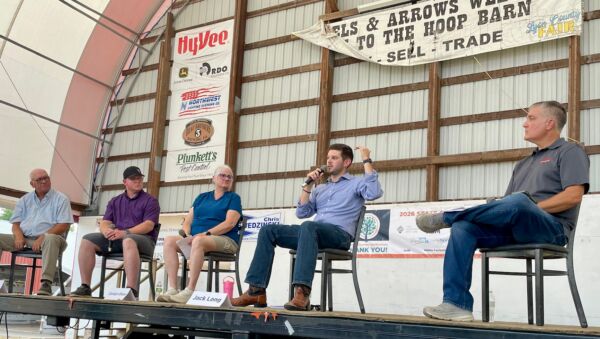
Jack Long speaks at the State of Agriculture program.
Panelists also emphasized expanding markets for agricultural products, supporting beginning farmers and encouraging producers to participate in commodity groups and general farm organizations to help shape future policy.
The discussion concluded with recognition of the International Year of the Woman Farmer. Olson said women continue to play increasingly important leadership roles both on family farms and throughout the agriculture industry, noting modern farming depends on a wide range of skills and responsibilities.
Following the event, local legislative candidates said the discussion reinforced many of the issues facing southwest Minnesota agriculture.
Braxton Seifert, who is running for the Minnesota Senate District 15 seat, said one of his biggest takeaways was the need to create additional markets for farm products while allowing producers to continue operating without unnecessary government interference.
“We need more markets,” Seifert said. “We need to just let our farmers farm. They’re the stewards of the land… and we need to do what they do best, and that’s grow food for a hungry world.”
Seifert also said hearing directly from producers is critical for policymakers.
“It makes a big difference to have real people in the industry come out and tell us what’s hurting them, what’s helping them and the best way to get the job done,” he said.
Brad Hennen, who is running for the Minnesota House District 15A seat, said the forum provided valuable discussion on both the strengths and challenges facing agriculture. He said regulatory issues, taxes and the farm economy were recurring themes throughout the event.
“I heard back from the response that regulatory challenges were a big part of it,” Hennen said. “I also heard that taxes, of course, are a challenge.”
Hennen added that while investments in areas such as education are important, producers remain concerned about the property tax burden on farms and want to ensure taxpayer dollars are spent responsibly.
Franzky closed the event by encouraging producers to stay engaged with policymakers and continue sharing agriculture’s story with consumers, saying the industry’s future depends on working together to address challenges while building new opportunities for Minnesota agriculture.