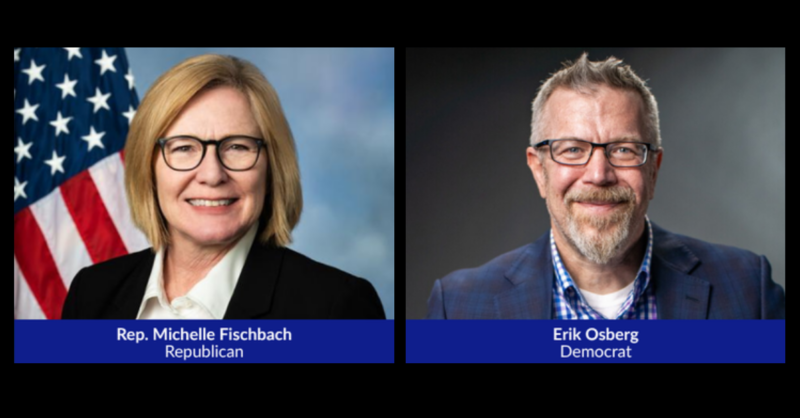
MARSHALL, Minn. — Republican incumbent Michelle Fischbach and DFL challenger Erik Osberg are offering different approaches to federal spending, rural health care and agricultural policy as they compete for Minnesota’s 7th Congressional District seat ahead of the November 3 election.
In separate interviews with Marshall Radio, the candidates discussed the national debt, access to health care in rural communities, trade policy and their priorities if elected.
On federal spending, Fischbach said Congress should focus on reducing unnecessary spending and strengthening oversight of government programs. She pointed to a rescissions bill that she said cut $9.3 billion in federal spending.
“We also have some reforms to the SNAP program and to some of the entitlement programs that we have in Congress or in the government,” Fischbach said. “We made reforms that made sense, number one, to keep the program stronger, but number two, to get those folks that shouldn’t be on it off.”
Fischbach said the government needs to ensure assistance reaches the people who qualify while preventing fraud and making sure taxpayer money is spent responsibly. She said she favors reviewing programs and making reforms when necessary rather than describing those changes as cuts.
Osberg said addressing the national debt will require a combination of spending reductions and increased federal revenue. He identified what he called unnecessary projects and military spending as potential areas for savings, while arguing that large corporations should pay taxes on money earned in the United States.
“We have a $40 trillion debt, and we’re not going to cut our way out of that,” Osberg said. “It’s got to be a balanced approach. We have to have strategic, humane spending cuts. But as far as revenue goes, we have a collections problem as much as we have a spending problem.”
Osberg said he would prioritize protecting programs such as Medicaid, Medicare and Social Security, along with other assistance for people who need help.
The candidates also offered different perspectives on improving rural health care.
Fischbach pointed to the federal Rural Health Transformation Fund, saying funding was beginning to be distributed after Minnesota went through the application process. She also highlighted telehealth as a way to help rural residents access specialists without traveling long distances.
“If they can see a specialist via telehealth, I mean, it doesn’t replace, you know, seeing a doctor, but it certainly can supplement it,” Fischbach said. She added that Congress needs to ensure telehealth services can continue and receive proper reimbursement.
Fischbach also discussed the federal 340B drug discount program, describing it as an important resource for rural hospitals. She said any changes to the program should preserve its benefits for rural communities. She also pointed to efforts to encourage medical professionals to complete training and residency experiences in rural areas.
Osberg argued that broader changes are needed to address the way health care is funded and delivered. He said access should not depend on a person’s income or employment and identified corporate influence in politics as a barrier to reform.
“I believe we as a nation need to get to a place where access to healthcare is a human right, not a privilege based on your wealth or where you work,” Osberg said.
He called for a constitutional amendment overturning the Supreme Court’s Citizens United decision, which addressed political spending by corporations and other organizations. Osberg said reducing corporate influence would help lawmakers pursue health care policies based more on people’s needs than on profits.
Agricultural policy was another key issue in the interviews, with both candidates discussing trade, input costs and uncertainty facing farmers.
Fischbach said she has worked with the administration to address the effects of tariffs and serves on the House Ways and Means Subcommittee on Trade. She said trade agreements should include agriculture and provide fair competition for American producers.
She also pointed to expanding domestic markets for agricultural products, including legislation allowing year-round sales of E15 gasoline, a fuel blend containing 15% ethanol. Fischbach said the legislation passed the House and was included in the Senate farm bill.
“One of the big things we can do is make sure we’ve got strong markets, whether it be international free and fair trade or domestic markets,” Fischbach said.
Fischbach also discussed proposed tax incentives for producing everyday products from renewable, plant-based materials as another way to create markets for agricultural commodities.
Osberg said Congress needs to reassert its constitutional authority over tariffs, arguing that unpredictable trade policies create additional challenges for farmers already dealing with uncertain markets and production costs.
“Farming is unpredictable enough. But if you have no idea what somebody is going to tweet and what a tariff might be and how that might impact your input cost or wreck your global markets, that creates more uncertainty,” Osberg said.
He said ending that uncertainty should be the first step toward helping farmers. Osberg also supported developing domestic demand for agricultural commodities and said the country should avoid unnecessary trade disputes with neighboring nations.
The candidates also addressed how they would represent the district’s interests when those priorities differ from their parties’ national agendas.
Fischbach cited the bipartisan effort to advance year-round E15 legislation as an example of working across party lines. She said the measure was a priority for agriculture groups and received support from rural Democrats, despite opposition from much of Republican leadership.
Osberg said his campaign has focused on meeting directly with voters throughout the district. He said he has traveled more than 50,000 miles and attended more than 360 events since announcing his campaign in March 2025.
“I’m not running to represent a party. I’m not running to represent the president. I’m running to represent the people,” Osberg said. He added that he has visited all 38 counties in the district multiple times and heard concerns about the need to restore constitutional checks and balances.
Fischbach said she is seeking another term because she believes she has been a strong voice for rural Minnesota, particularly on agriculture and health care. Osberg said he entered the race out of frustration with the status quo and a desire to leave a better future for his children.
Election Day is Tuesday, November 3. Minnesota voters can find their polling place, check registration, view sample ballots and access early voting and absentee ballot information through the Minnesota Secretary of State’s website at mnvotes.gov. Early in-person voting is available through Monday, November 2.