
MARSHALL — Marshall Municipal Utilities continues to invest in reliable service and long-term infrastructure as it welcomes new leadership and advances major projects in both its electric and water departments.
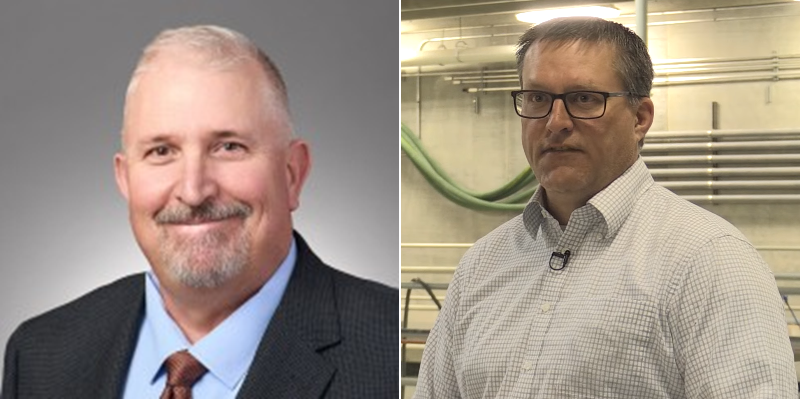
 Pete Wyffels recently returned to his hometown to serve as general manager of MMU, coming full circle after beginning his career in Marshall in 1992 as an apprentice lineworker. With 35 years in the electrical industry, Wyffels previously held leadership roles in Glencoe and Chaska before stepping into the position following the retirement of former general manager David Schelkoph.
“It’s been a great tour around the state,” Wyffels said. “I’m very honored that I actually have the opportunity to come back here to Marshall.”
Wyffels said the transition has gone smoothly, crediting a knowledgeable and cohesive staff. “Everybody, all the departments here work really well together,” he said. “It’s a good gelled group of people to work with.”
On the electric side, MMU continues to earn recognition for reliability. Wyffels said the utility recently went 21 months without any unplanned outages, an achievement he described as “pretty much unheard of.” MMU has again been recognized at the Diamond level through the Reliable Public Power Provider program by the American Public Power Association, one of the highest distinctions available.
Much of that reliability stems from long-term infrastructure investments, including burying electric lines throughout Marshall in 2006 and adding substations to better distribute load. “MMU has invested a lot into its infrastructure over the years and we’re starting to see how that’s paying off now,” Wyffels said.
Marshall is also considered one of the larger municipal power suppliers in Minnesota, with a peak demand exceeding 80 megawatts. Wyffels noted that the city’s strong commercial and industrial base drives that load and reflects the region’s economic strength.
MMU purchases power cooperatively through Missouri River Energy Services, a joint action agency made up of 61 member utilities across Minnesota, South Dakota, North Dakota and Iowa. Marshall also receives about 25% of its power from the Western Area Power Administration through hydropower generated at federal dams. Wyffels said the cooperative structure allows MMU to secure long-term, lower-cost energy contracts and maintain local representation on the agency’s board.
The utility is also moving forward with a generator replacement project. MMU has operated a diesel turbine downtown since 1968 that serves as emergency backup generation and provides revenue when called upon by grid operators. During recent extreme weather events, including winter storms, MMU was asked to bring the unit online to support the strained regional grid.
With grant assistance secured through Missouri River Energy Services, MMU is installing a new 12-megawatt generation facility near the city’s filter plant. The new plant will include four reciprocating CAT engines. About a quarter of the project cost was covered by grant funding, with the remainder financed through bonding. The existing turbine will remain in service as long as feasible.
On the water side, Water Operations Supervisor Jeff Larson outlined several upcoming infrastructure projects. This summer will bring the second phase of the College Drive reconstruction in coordination with MnDOT, including installation of new water main along the route. Additional reconstruction projects are planned on North High Street and South Fifth Street, with East Street likely targeted in 2027.
 Larson, who joined MMU in 2007 and became water operations manager in 2014, said Marshall’s water system has evolved significantly over time. Historically, the city struggled to secure adequate water supplies. That changed in 2015 when a third source north of Cottonwood came online, stabilizing supply and helping protect local aquifers.
A 2021 expansion at the water plant further softened water and reduced chloride discharge into the wastewater stream. Looking ahead, Larson said the primary focus over the next three to five years will be replacing aging underground pipe.
He also pointed to future regulatory challenges, including a nationwide effort from 2027 to 2037 to remove lead service lines. “How does funding play into that? How do we get the funding? How many can we get out?” Larson said. “That’ll be a challenge for the decade to come.”
Both Wyffels and Larson emphasized MMU’s role as a locally controlled public utility. Revenue generated from electric and water bills stays in Marshall, supporting infrastructure, jobs and long-term system reliability.
“At the end of the day, the mission is to serve Marshall and make the decisions that are in the best long-term interests of the people who live here and work here,” Wyffels said.
For both men, the work is about service. Wyffels recalled deciding at age 14 that he wanted to become a lineman. “This job is really a rewarding job,” he said. “I always say I get a paycheck every week in the mail, but I also get a paycheck from the people, the people that we serve.”
Larson echoed that sentiment. “Every community needs it,” he said. “When you’ve got a main break or a power outage and that gets settled, people are usually fairly grateful. People do come up to you and thank you at the end of the day. And that means a lot.”