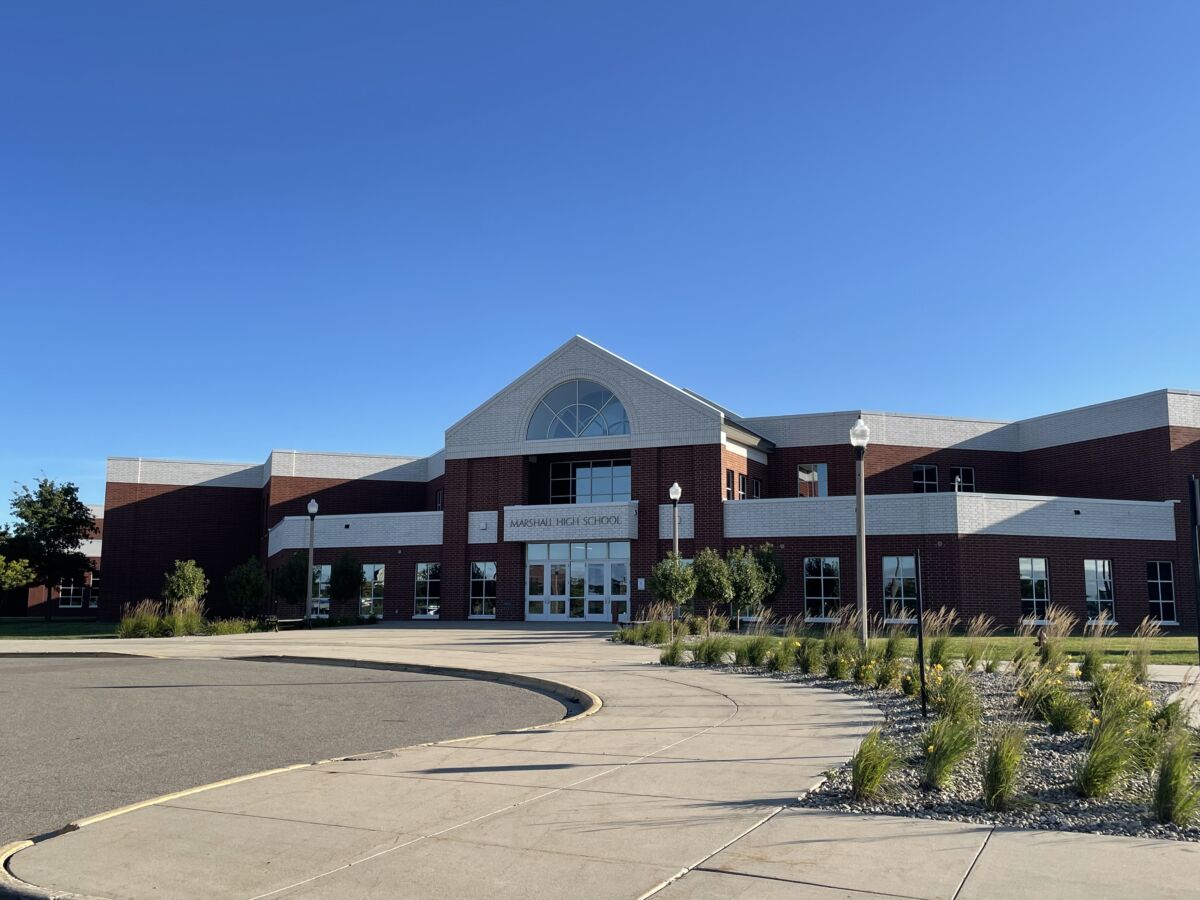
MARSHALL, Minn.—Marshall Public Schools officials say they will ask voters on Nov. 4, 2025, to approve a 10-year operating levy for the district. An operating levy is a local property tax used to fund day-to-day school needs such as teacher salaries, classroom materials, technology and utilities. According to the district’s website, the proposed levy would raise about $2 million per year (approximately $765 per student) for the schools’ general fund. The district notes this is roughly a 5% boost to its budget and would allow it to preserve existing programs and staffing – for example, keeping all current teachers, support staff and services in place. The referendum is scheduled for Tuesday, Nov. 4, 2025.
District Improvements and Levy Goals
District materials highlight recent student achievement and argue the levy is needed to protect and build on those gains. For example, the site reports that 91% of K–1 students in a reading intervention program have improved their reading performance, and that enrollment in high school career–technical courses has risen by 18% in the past year. Chronic absenteeism has fallen and disciplinary incidents are down, and even 18 school programs (e.g. Knowledge Bowl, speech, wrestling) recently qualified for state-level competitions. According to officials, the new funding would help maintain small class sizes and continue successful academic programs in reading, math and science. It would also expand career and technical education in fields like trades and healthcare, and sustain student support services (such as counseling and tutoring) and extracurricular activities.
Tax Impact and Relief
Homeowners would see a modest tax increase if the levy passes. The district’s information sheet gives an example: an owner of a median-valued home ($225,000) would pay about $26 more per month starting in 2026 if the levy is approved. (The levy would begin in 2026 and include yearly inflation adjustments.) The tax would apply to all residential, commercial and industrial properties in the school district. By state law, pure farm and seasonal/vacation properties are exempt, so owning farmland or a lakeside cabin would not be affected. All revenue raised by the levy would stay in the local schools – not a cent would go to city, county or state government.
The district also notes that state tax relief programs can offset this increase for qualifying taxpayers. For instance, eligible homeowners can use Minnesota’s Homestead Credit Refund, a Special Property Tax Refund, or a Senior Citizen Property Tax Deferral to reduce the levy’s impact on their bills. These programs depend on factors like income, age and home value.
Voting Information
The referendum will appear on the November 4, 2025, ballot in the Marshall Public Schools district. Official information confirms that polling places will be open from 7 a.m. to 8 p.m. on Election Day. All local residents must be registered to vote; those not already registered may do so online or in person on Election Day (with valid photo ID and proof of residence).
Voters can cast ballots early if desired. Early voting began Sept. 19, 2025. District residents can request an absentee (mail-in) ballot online or via a paper form. Ballots may be returned by U.S. mail or dropped off in person at the school district’s office (401 S. Saratoga St.). Alternatively, voters may cast ballots in person at the district office during business hours (Monday–Friday, 8:00 a.m.–4:30 p.m.) up to and including Election Day. (On Election Day itself, voters will go to the Middle School; signs will guide them to the polling area.)
Potential Cuts if Referendum Fails
The district’s website also spells out what would happen if the levy is rejected. It warns of deep budget cuts in that case: roughly $1.9 million would need to be cut from the budget, including the elimination of about 29 staff positions across all schools. That means significantly larger class sizes at every grade level and fewer teachers, aides, and specialists for students who need extra help. Other reductions (already listed on the site) would include fewer elective courses, trimmed support services, and cut transportation routes.
District leaders note that they have already used one-time federal and state grant funds (including COVID-relief money) and pared down non-essential spending to balance past budgets. However, those temporary sources are now nearly exhausted. The website stresses that a voter-approved levy is the only reliable, long-term way to stabilize funding. The levy itself is time-limited: it would automatically expire after 10 years, rather than run indefinitely.